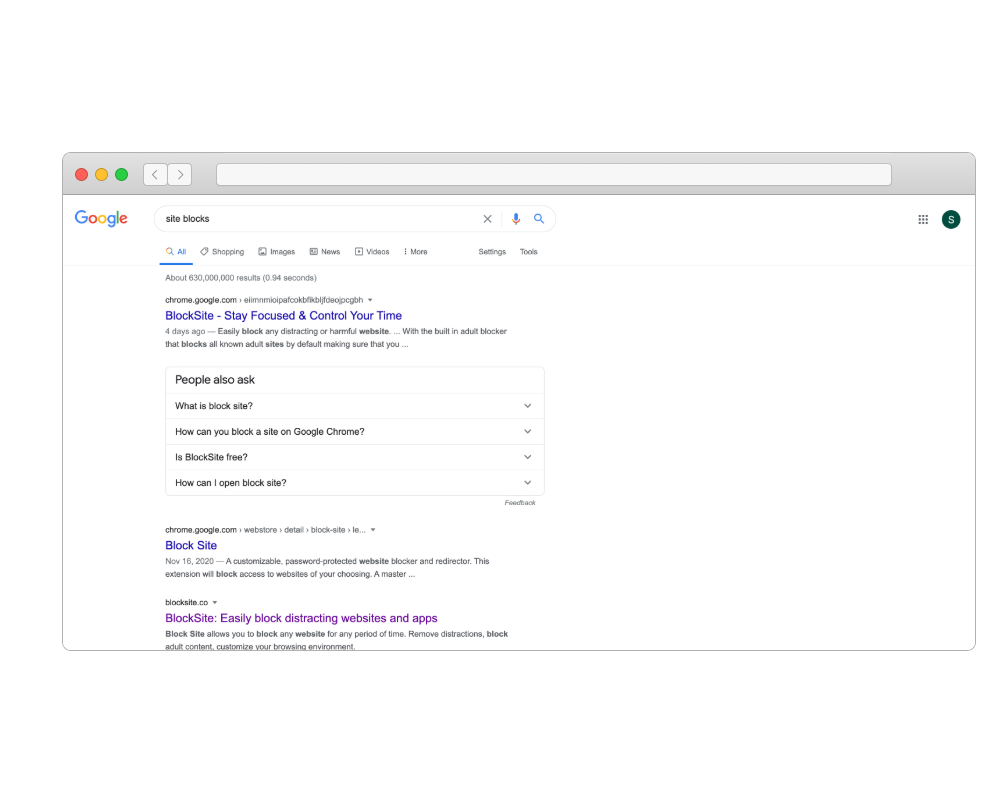

The Australian government has admitted that the AUS$85m it spent trying to protect kiddies from internet porn was AUS$85m too many.
Little more than six months after Oz rolled out a free internet filter for concerned parents across the country, Federal Communications Minister Stephen Conroy has dubbed the $85m scheme a "failure," reports The Sydney Morning Herald.
This porn-filtering effort is the centerpiece of the government's $189m NetAlert program, designed to keep Aussie minors away from sexual predators as well as less than wholesome online content.
When the free filter made its debut in August, officials predicted that 2.5m households would use the software within the year. But within minutes, a clever kiddie cracked its protection wide open. And as of today, only 144,000 copies have been downloaded or ordered on CD-ROM.
And of those 144,000, only 29,000 are actually being used.
"The program has clearly failed, despite over $15m being spent in advertising to support it," Conroy told The Sydney Morning Herald, before adding that filters aren't everything. "Labor has always said that PC filtering is not a stand-alone solution to protecting children from online dangers."
Then he added that the government has a new plan for battling unsavory online material - and it's all about filtering too. "The Government has a comprehensive cyber-safety plan that includes the implementation of mandatory ISP-based filtering to deliver a filtered feed to all homes, schools and public internet points. Education for parents and teachers as well as children is a priority."
Evolution Wins as Creationists (Accidentally) Switch Sides in Florida
The Florida Board of Education officially upheld evolution yesterday.
The board didn't quite mean to do that, of course. In a 4-3 vote, the Board accepted a proposed curriculum that replaced all references to evolution with the phrase "the scientific theory of evolution." In so doing, the board inadvertently made evolution central to public school science education, and also, almost incidentally, mandated education on just what constitutes a "scientific theory."
Until now, Florida's schools weren't required to teach evolution. The old curriculum guidelines didn't even mention it by name.
That state education officials would approve the new standards was not a foregone conclusion. Since last November, 12 county school boards passed resolutions calling for classroom evolution to be balanced by "alternatives" -- a polite euphemism for religiously orthodox explanations of life. The resolutions were non-binding, but raised fears that that the Board of Education would try to duck controversy by diluting the new standards.
Apart from being illegal, teaching creationism as science is a very bad idea. Students may not be permanently scarred by failing to learn about evolution at an early age -- though the National Academy of Science would surely disagree -- but, they're bound to be stunted if told that evolution and creationism are even remotely equivalent in any scientific sense.
Yesterday's decision is thus great news for Florida -- and perhaps for the nation. Had Florida backed down, Texas -- where a pro-evolution science education official was fired last year, and a curriculum revision is scheduled later this year -- might have followed suit. Together they exert enough purchasing power to drag the nation's textbook manufacturers with them, science be damned.
The 4-3 vote was obtained by including a last-minute wording change to the standards. Suggested by the state's education commissioner after he realized that the original version wouldn't pass, it required that the curriculum's references to "evolution" be replaced by the "scientific theory of evolution." Linda Calloway, who'd publicly opposed the original version in months leading up to the vote, ended up a supporter.
The amendment's supporters called the language change a victory -- and it is, though not in the way they imagine.
Not only will Florida's students learn about evolution; they'll also learn that the scientific definition of a theory is different from the everyday definition, referring not to wild-eyed speculation but to a vast body of observation and testing that confirms a hypothesis so strongly that it might as well be considered fact.
A big thank-you, then, to religious critics of evolution education. The language change will better help Florida's children understand not only evolution, but science itself. (If only this USA Today headline writer had the same education.)
Isn't democracy grand?
Note: People interested in how religious and scientific beliefs need not conflict should check out my Q&A with evangelical theologist Michael Dowd.
Note Two: I originally reported that the wording changes were known as the "academic freedom proposal." That actually referred to a separate amendment that was rejected by the Board.
Decision: Florida schools must teach evolution [Palm Beach Post]
Evolution joins curriculum [St. Petersburg Times]
Dutch professor calls RIAA expert 'borderline incompetent'
After suffering humiliation at the hands of a hacker in 2007, the future of anti-piracy company MediaDefender is in serious doubt. Its parent company, ARTISTdirect, has called in a team of specialists to “assist in the exploration of strategic alternatives.” That’ll be alternatives to liquidation, then.

In early 2005, online music business ARTISTdirect saw its stock being traded at just a cent. Then in mid 2005, it paid MediaDefender founders, Randy Saaf and Octavio Herrera, $43m for their anti-piracy company and the stock rocketed to beyond $3.00. Smiles all round - but not for long.
In September 2007, disaster struck. MediaDefender had gathered many enemies due to their anti-p2p activities. One of them decided to teach the company a lesson by hacking into their systems and leaking their internal emails and closest secrets to the Internet. The effect on the company and its operations was dramatic.
Within days, seemingly everyone knew about the MediaDefender leak and inevitably, news started filtering through to MediaDefender’s customer base. With the company’s secrets out in the open, and its operations virtually shut down, people started asking if it was possible for the business to continue and if it did, how effective could it be? MediaDefender’s customers weren’t happy, and the company was forced to issue $600,000 in credits to them by way of compensation for a total lack of results in the 3 months following the leak. But this was just the beginning.
In a SEC filing, the financial damage started to become clear. As a result of the hacking, by November 2007 MediaDefender had lost a massive $825,000 - and growing. Before the email leak, stock was around the $2.25 mark. Three months later in December 2007, things were starting to look bleak as stock plummeted to $0.63.
With the stock sitting today at $0.51, ARTISTdirect needed to take some drastic action - and they have, calling in Los Angeles based financial services company, Salem Partners LLC, to try and sort out the mess. Salem Partners are to explore “strategic alternatives” for the business (which is currently $30m+ in debt), such as restructuring, merger or sale. For this service they will be rewarded well: Salem are on a $50,000 a month retainer for the first 4 months with numerous six and seven-figure bonuses woven in to the rates, dependent on the deals they manage to do.
They could decide to sell MediaDefender off as a separate entity, so it’s possible that Randy and Octavio would like to buy their old business back. One thing is certain - it won’t fetch anything near the $43m they sold it for. The pair currently pick up $350k a year each at MediaDefender so they’re not quite at rock-bottom yet, but would they even want it back after last year’s disaster? Time will tell.
Potential buyers will probably choose to wait a little. According to a source, ARTISTDirect’s current FORM 10-QSB financial statement is not online, but it should have been posted to SEC by Feb 14th 2007 March 31st 2007. Looks like the worst of the financial pain hasn’t even been reported yet.
Update: A comment from a TorrentFreak reader who wanted to correct the above date:
“Most companies have financial years that end 12-31, and quarters that end 3/31, 6/30, 9/30. You file 4 reports about financials (at a minimum) per year. A quarterly report is called a 10-Q, a yearend report is called a 10-K. The forms they are filing are 10-QSB and 10-KSB, with the SB meaning small business, however they are still governed by the same rules and regulations.
Here is where it gets tricky, there are 3 types of filers. Large Accelerated, Accelerated and Non-Accelerated. Your Large Accelerated are your big boys, Ford, GE, Coca-Cola, etc, they have a market capitalization of over $700Million US. Accelerated are companies you’ve heard of, but they aren’t that big. Market capitalization of between $50million and 700million.
Non Accelerated is everything under 50million. To be filing a 10-QSB/KSB, you have to be Non Accelerated by default. So anyways, a non-accelerated company has 45 days after the end of a quarter to file a 10-Q. If their financial end of year was 6/30, their 10-Q would have been due February 14th. However, this time of year, it’s time for a 10-K, because their financial end of year is 12/31. A Non Accelerated company gets 90 days from end of year to file a 10-K. All of this means, they are due to file a 10-KSB by March 31st.”
The Pirate Bay finally got what they hoped for.